
Jundishapur, the Cradle of the World’s First University
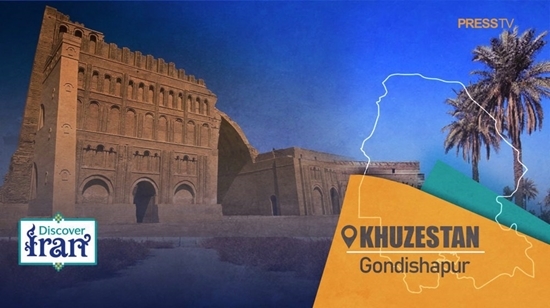
Ancient Jundishapur, of which only remnants now remain in the outskirts of the city of Dezful, is regarded—based on historical documentation—as the starting point for the formation of the world’s first systematized model of higher education.
The first university in the world was established in this city by order of Shapur I of the Sasanian Empire. During the Sasanian era, approximately 1,750 years ago, this institution became the world’s earliest scientific center, where disciplines such as medicine, philosophy, and astronomy were taught.
The 1,750th anniversary of the foundation of the University of Jundishapur (University of Gundi‑Shapur) was included in UNESCO’s Global Commemoration List on November 3, 2017 (12 Aban 1396). This event provided a significant opportunity to further highlight Iran’s prominent role in the production of science and knowledge from antiquity to the present day.
According to the Director of the Cultural Heritage and Tourism Base of the Historical Axis of Jundi (Gundi) Shapur and Karkheh Iwan, Jundishapur—owing to its possession of the earliest scientific, academic, and hospital centers up to the 7th century CE, its distinguished physicians, and its profound influence on other peoples and cultures—has attracted considerable attention within international academic and scientific circles.
Yaghoub Zolqi added that until recently, the University of Oxford, founded in the 12th century CE, was widely regarded as the world’s oldest university. However, with the registration of Jundishapur (the academic and hospital city of Dezful) in UNESCO’s Commemoration List—with a documented establishment dating back to the 2nd century CE—the cradle of scientific and intellectual production has effectively been recognized globally under Iran’s name.
He further referred to the key objectives and themes discussed during the UNESCO session for the inclusion of Jundishapur in the Commemoration List, noting that one of the most important proposals was the organization of a visit by a delegation of leading scientific and cultural elites from around the world to Dezful to visit Jundishapur.
Zolqi emphasized that securing financial resources for preparing the archaeological site of Jundishapur, continuing archaeological excavations and research activities, and equipping and activating the administrative site of the heritage base were among the other critical matters highlighted in connection with this significant event.
In continuation, the Director of the Cultural Heritage and Tourism Base of the Historical Axis of Jundi (Gundi) Shapur outlined the most important actions undertaken at the site and in organizing the International Congress of Jundishapur, stating that these measures include:
the promotion of cultural awareness and continuous engagement with local residents and farmers to familiarize them with the site’s historical significance; the completion of the first season of archaeological excavations; restoration of excavation trenches featuring remarkable architectural elements; restoration of the tomb of Ya‘qub ibn al‑Layth al‑Saffar; landscaping of the surrounding area using brick paving; and the installation of 20 informational and directional signboards introducing historical monuments—efforts that are still ongoing.
The 1,750th anniversary of the foundation of the academic city of Jundishapur, from the perspective of historical events and prominent cultural figures, was globally registered at UNESCO Headquarters in Paris in November 2017.
The international document commemorating the 1,750th anniversary of the establishment of the University of Jundishapur was published on November 3, 2017, during UNESCO’s Annual General Conference in Paris.
This event represents one of the nation’s greatest scientific and civilizational achievements, as—according to the document issued by UNESCO—the University of Jundishapur has been officially recognized as the world’s first university and scientific center.
The document released by UNESCO constitutes a global acknowledgment of the scientific legacy of Iranians 1,750 years ago.
The ancient city of Jundishapur, covering an area of approximately 800 hectares, is located 12 kilometers from the city of Dezful, adjacent to the village of Eslamabad.
The remaining آثار of this ancient city were registered on September 15, 1931 (24 Shahrivar 1310) as National Heritage No. 46 on Iran’s list of protected monuments.

نظر دهید